
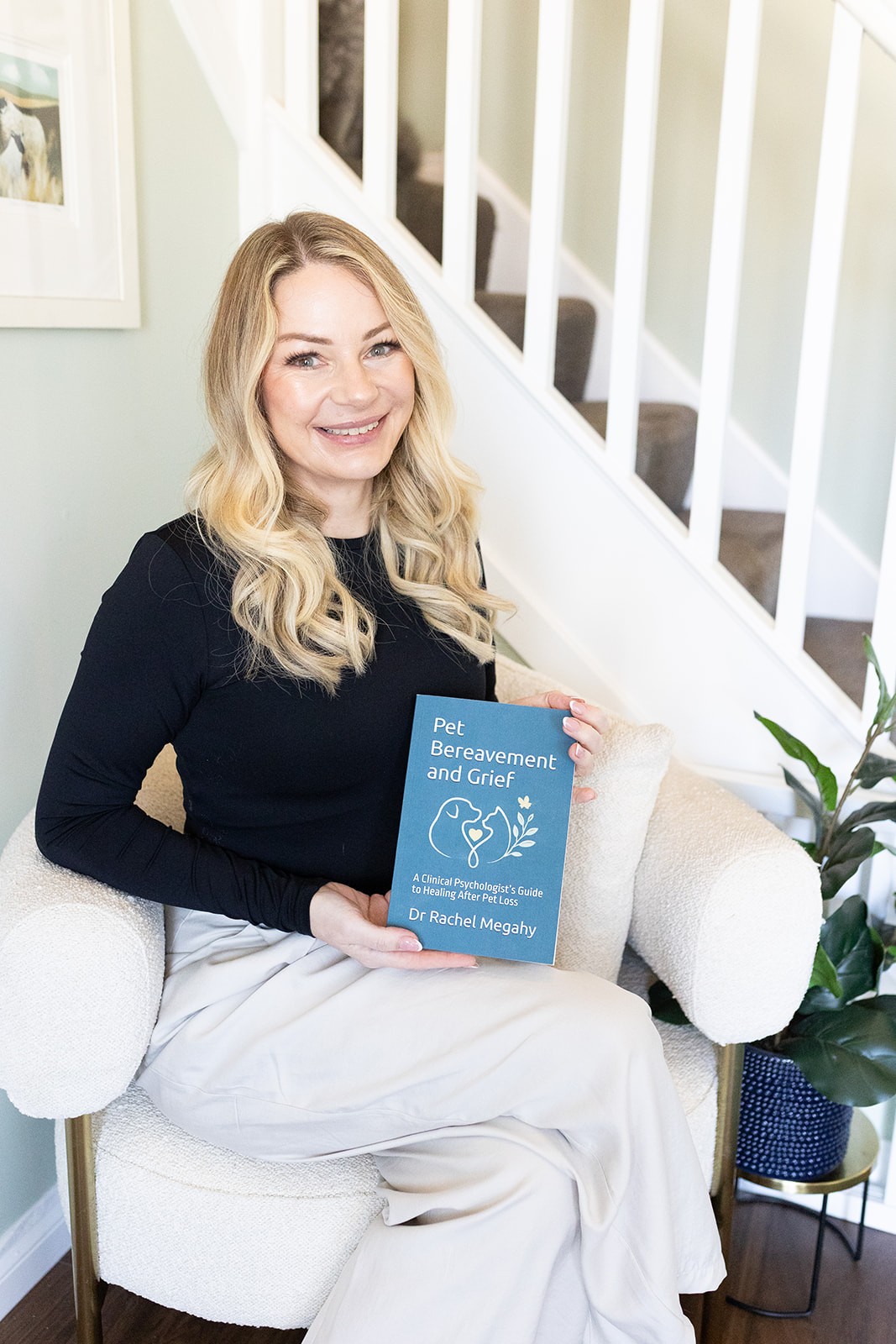
The Book
Pet Bereavement and Grief
A Clinical Psychologist's Guide to Healing After Pet Loss
The first book to apply a structural psychological model specifically to the experience of losing a pet. Not a general grief book adapted to animals — a 30-chapter, 281-page guide built from the ground up for this.
What makes this different
Not just sadness. A structural disruption.
Most resources for pet loss offer emotional validation and general grief guidance. That is useful — but it doesn't explain why the experience can feel so disproportionate, disorienting, and physically destabilising.
This book starts from a different place. It asks: what was the relationship actually doing? Not just emotionally, but structurally — in terms of daily routine, nervous system regulation, identity, and sense of role.
The answer to that question changes everything about what support looks like.
"It is not just that you loved them. It is that they were part of the system that kept you steady."
Grounded in
Attachment Theory
Why the bond formed as it did, and why its disruption activates the same psychological systems as human bereavement.
Grounded in
Trauma-Informed Practice
Understanding why some losses feel traumatic, what the body does with shock, and how to move through it without becoming stuck.
Grounded in
Contemporary Grief Research
The Dual Process Model, continuing bonds theory, prolonged grief, and the specific research base on pet bereavement.
Inside the book
30 chapters across 6 parts
Each part addresses a different dimension of the experience — from the earliest acute phase through to meaning-making and moving forward. You can read cover to cover or return to individual chapters as different aspects of grief come into focus.
Part I
Understanding Pet Loss
- The psychology of pet loss
- The Dual Process Model
- Stabilising the acute phase
- Disenfranchised grief
- The digital landscape of grief
- Loneliness after loss
Part II
The Emotional Experience
- Guilt and moral pain
- Trauma and the replay button
- Identity and role loss
- Anger and unexpected reactions
- Ambiguous loss
- Neurodiversity and grief
Part III
Who Is Grieving
- Older adults and pet loss
- Grief within the family system
- Children and adolescents
- When grief becomes overwhelming
Part IV
Specific Circumstances
- Sudden and traumatic death
- Euthanasia and the enough list
- Anticipatory grief
- Missing pets and ambiguous loss
- When rehoming happens
Part V
Moving Through Grief
- Ritual and meaning after loss
- Nature as nervous system support
- Continuing bonds
- Rebuilding structure
- Clarified values
Part VI
Looking Forward
- Deciding about another pet
- What integration looks like
- Carrying the bond
- The GENTLE method in full
Who this is for
Written for the people no one takes seriously enough
This book was written for people who are grieving a pet and finding that the depth of the loss surprises them — and that the people around them don't understand it.
Anyone who has lost a pet and feels the grief is more intense or longer-lasting than they expected
People who want to understand why this hurts as much as it does, not just be told that it will pass
Those experiencing guilt, intrusive thoughts, or physical symptoms they didn't expect from grief
Neurodivergent people for whom the loss of a regulating relationship feels particularly destabilising
Older adults navigating pet loss alongside cumulative bereavement and questions about identity
Mental health professionals, GPs, and veterinary staff who work with bereaved pet owners and want a rigorous clinical reference
From the book
A passage from Chapter 1
The house is quieter than it should be. You wake and, for a split second, your body moves as if nothing has changed. You listen for the familiar sound — the stretch, the shake of fur, the soft thud of paws or the rustle in the cage. You prepare for a presence that has anchored your mornings for years.
Nothing. You lie still, waiting for a sound that does not come.
Later, you catch yourself stepping around the place where their bed used to be. You hesitate before throwing away the last of their food. You pause at the door because there is no lead to reach for.
The silence feels disproportionate to the size of the animal who filled it.
Readers
From people who found it here
This is the first thing I've read that actually explained why I felt the way I did. Not just sadness — the physical symptoms, the disruption to my days, the guilt. All of it.
Reader review · Lost her cat of 14 years
I'm a GP and I recommended this to a patient last week. The clinical grounding is genuine and the writing is unusually accessible. It fills a real gap.
GP, London
The chapter on guilt alone was worth the entire book. I'd been carrying that for months. Understanding why the mind does it changed something for me.
Reader review · Lost her dog after a long illness
The neurodiversity chapter is outstanding. I've never read anything that captured so accurately why losing my dog affected my whole ability to function — not just my feelings.
Reader review · Autistic reader
I'm a veterinary nurse and I've shared this with three clients now. Every one of them has come back to say it helped. We needed this book.
Veterinary nurse · Small animal practice, Midlands
I appreciated that it didn't try to rush me through grief or tell me it would pass. It took the experience seriously, psychologically. That mattered enormously.
Reader review · Lost her horse of 22 years
Ready
Begin with the book.
Available now on Amazon in paperback and Kindle. The companion journal is also available separately — or as a bundle.