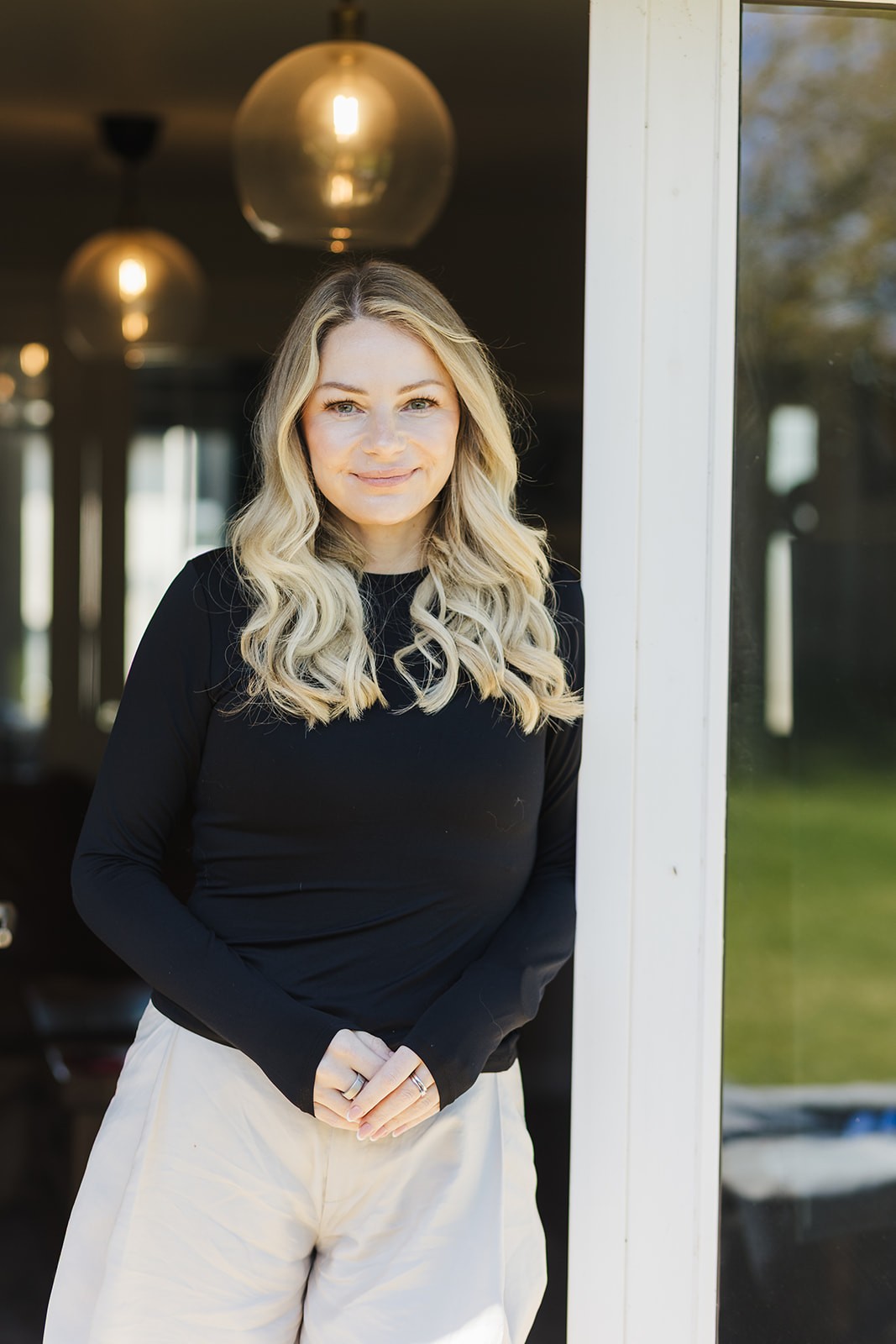
Dr Rachel Megahy
Clinical Psychologist · Author
Registrations & Memberships


HCPC, BPS, and Accredited member of the Association of Pet Bereavement Counsellors
About
Dr Rachel Megahy
Clinical Psychologist · Author · Founder of the Structural Role Model of Pet Loss
I'm a Clinical Psychologist with over 20 years of NHS experience, having worked in adult mental health since 2006. Alongside my private work, I continue to work part-time within the NHS, specialising in eating disorders, obesity, and general adult mental health.
Throughout my career, I've supported people experiencing a wide range of difficulties, including anxiety, depression, stress, low self-esteem, life transitions, phobias, OCD, and the emotional impact of physical health conditions. I have particular expertise in working with trauma, including post-traumatic stress, and eating disorders such as anorexia nervosa, bulimia nervosa, and binge eating disorder.
My approach is compassionate, collaborative, and tailored to each individual. I believe in creating a safe, welcoming, and trusting environment where we can work together to understand difficulties and develop a treatment plan that meets your unique needs.
I hold a BSc (Hons) in Psychology and a Doctorate in Clinical Psychology from the University of Edinburgh. I am also an experienced supervisor, supporting other mental health professionals and trainee clinical psychologists.
I am a Chartered Psychologist with the British Psychological Society (BPS), a registered Practitioner Psychologist with the Health & Care Professions Council (HCPC), and a member of IPT-UK.
As part of my work supporting people through grief and loss, I understand the profound bond we share with our pets and the emotional impact their illness, ageing, or death can have. My therapeutic work draws on evidence-based approaches including Cognitive Behavioural Therapy (CBT), Interpersonal Psychotherapy (IPT), Eye Movement Desensitisation and Reprocessing (EMDR), and Schema Therapy.
The framework
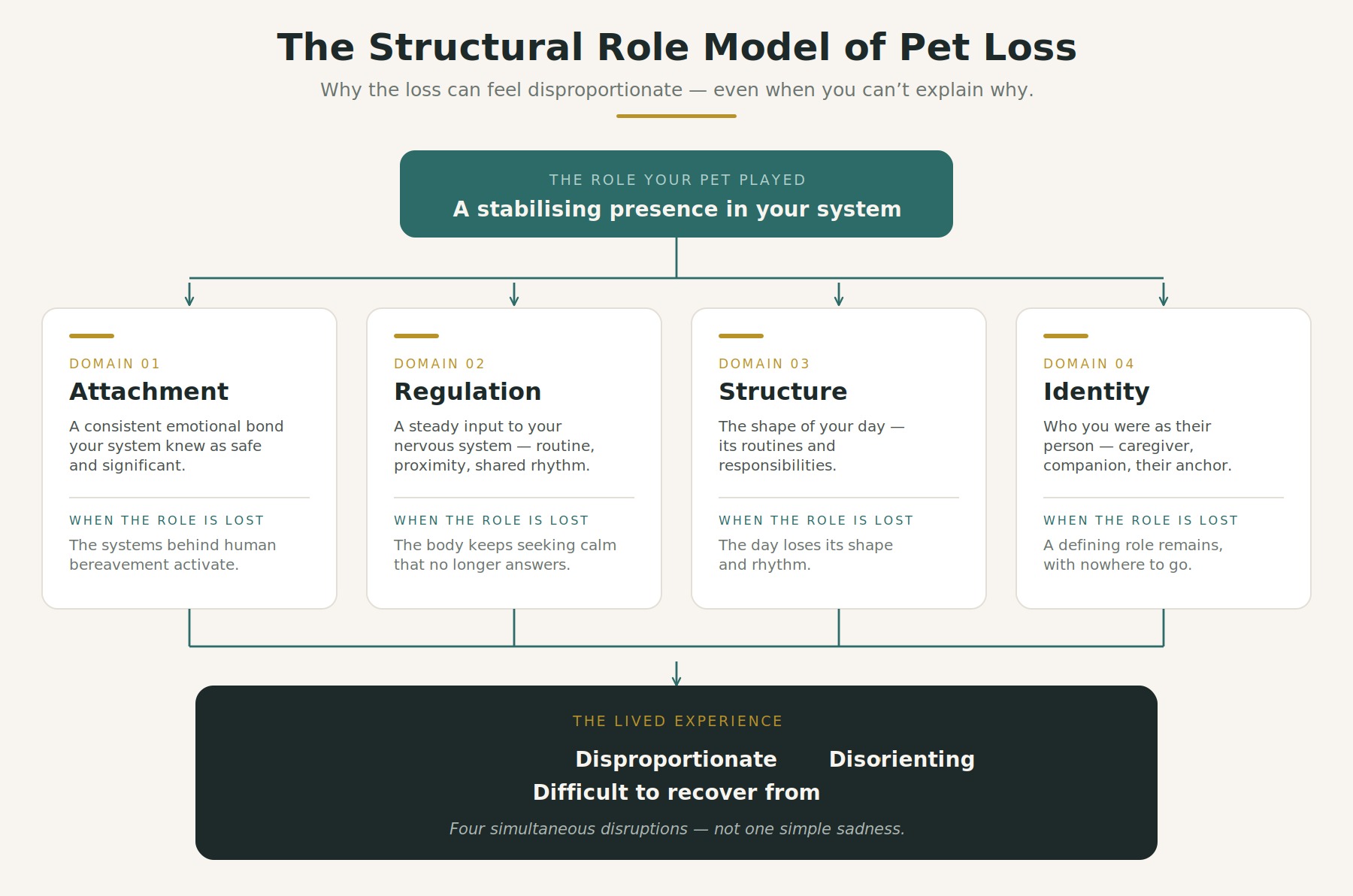
The Structural Role Model of Pet Loss
Across clinical work, I noticed that intense pet loss grief followed a recognisable pattern that existing bereavement models didn't fully account for. The grief was not only about attachment — it was about structure.
Pets often function as attachment figures and as regulatory anchors. They shape the day, the routine, the sense of role. When they die, the disruption is not only relational and emotional — it is structural and physiological. The nervous system loses a source of regulation. The day loses its shape. Identity loses a defining role.
The Structural Role Model names this pattern explicitly. It provides a framework for understanding why pet loss can feel disproportionate, disorienting, and physically destabilising — and what it takes to recover from it.
This is not a general grief model applied to animals. It was developed specifically from clinical work with pet bereavement, and it is the first of its kind.
The book
Pet Bereavement and Grief
The book is the culmination of this clinical work. It applies the Structural Role Model to the full range of pet bereavement experiences — from the earliest acute phase through to meaning-making, continuing bonds, and what it means to move forward without leaving them behind.
It is grounded in the same evidence-based frameworks used in NHS and specialist mental health settings, written accessibly for a general readership, and structured so it can be read in full or returned to chapter by chapter as different aspects of grief come into focus.
Pet Bereavement and Grief was published by Prism Psychology Press in 2026. It is available in paperback and Kindle.
Get in touch
Questions, enquiries, or just want to know more?
For individual support, professional services, or speaking enquiries, get in touch directly.