Emotional Steadiness
Their presence helped regulate your nervous system: the walks, the routine, the warm weight next to you. Without them, steadiness is harder to find — grief here is physical, not only emotional.
A course from Dr Rachel Megahy
A six-module course for the grief that people around you don't seem to understand. Work through the guilt, steady the days, and find a way to carry your bond forward — at your own pace, with nothing to keep up with.
Written and taught by Dr Rachel Megahy, Chartered Clinical Psychologist with over 20 years' NHS and private experience, specialising in traumatic pet loss. Author of Pet Bereavement and Grief.
One-to-one therapy with me is £120 a session. This is the same framework, at your own pace, with lifetime access — for a little more than a single session.
£147 · lifetime access
30-day guarantee: if the course isn't right for you, email me within 30 days for a full refund. No forms, no questions.
Start the GENTLE Path — £147By continuing you agree to the Terms of Use, including losing the 14-day cancellation right once access starts. The 30-day guarantee still applies.

People say things like "it was only a dog", or "at least it wasn't a person", or "you can always get another one".
And so a grief that is genuine, and physical, and everywhere in your house — the empty bed, the lead by the door, the silence at teatime — has to be quietly carried, often alone.
This kind of grief has a name: disenfranchised grief. It is grief the world doesn't quite give you permission to feel. It doesn't mean your loss is smaller. It means you've had to grieve without the room to grieve.
This course gives you that room.
For over twenty years I've sat with people at some of the most painful points in their lives. Some of the hardest grief I see is for an animal, and it's often the grief people feel least able to talk about.
Many of the people who come to me have spent months believing something is wrong with them for hurting this much. Nothing is wrong with them. They've lost a relationship that held their days together, and the people around them haven't quite understood that.
One-to-one therapy isn't available, affordable or right for everyone. So I've taken the framework I use in my clinical work and shaped it into something you can do at home, at your own pace, whenever the day allows.
— Rachel
You are not alone in this
Most people who take this course arrive with some version of these.
The Structural Role Model
Your pet wasn't one thing in your life. They held four structural roles — and when they died, all four went at once.
Their presence helped regulate your nervous system: the walks, the routine, the warm weight next to you. Without them, steadiness is harder to find — grief here is physical, not only emotional.
They shaped the shape of your day — feeds, walks, greetings at the door. When they go, the scaffolding of ordinary life goes with them.
Being their person was part of who you are. Caring for them gave you a role, so grief reaches into your sense of self, not just your feelings.
Your pet was a genuine attachment figure — a source of safety, comfort and daily companionship. What you are missing is their presence: a bond, not a possession.
Six modules, at your pace
A gentle, structured way through — one letter at a time. Nothing to keep up with. Nothing you can fall behind on.
Each module applies established psychological approaches to pet bereavement specifically — this is structured guided self-help, built with clinical rigour.
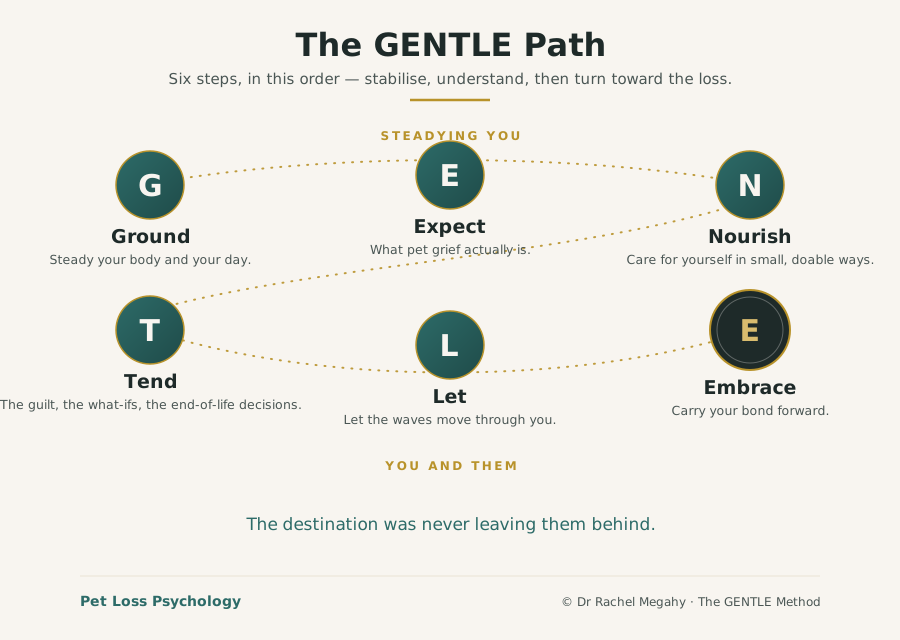
Steady your body and your day when everything feels unreal.
Understand what pet grief actually is — and why yours is not too much.
Care for yourself in small, doable ways while you grieve.
Meet the guilt, the what-ifs, and the end-of-life decisions with compassion.
Let the waves move through you, rather than bracing against them.
Carry your bond forward, and find a place for them in the life ahead.
Also included
Included at no extra cost, for the situations that need something more specific.
Supporting children through the loss of a family pet, at different ages and stages.
What to do when months have passed and nothing has shifted.
For teenagers, neurodivergent grievers, and older adults, whose grief often looks different and gets less room.
A taste of the course
This is a five-minute guided practice from Module 1, narrated by Dr Rachel Megahy. Have a listen before you decide anything.
Guided audio practice
Everything is yours to keep, at your own pace.
It's built on the framework in my book, on the model I use in clinical practice, and on the same approaches I'd use with you one-to-one. What it doesn't have yet is a wall of testimonials — so there's a 30-day money-back guarantee instead. If it isn't right for you, email me and I'll refund you, no questions asked.

Accredited member, Association of Pet Bereavement Counsellors

HCPC-registered Clinical Psychologist
Registration no. PYL17840
Six modules. Lifetime access. A 30-day money-back guarantee. You can begin tonight, or in a month — nothing expires and there's no schedule to keep.
One-to-one therapy with me is £120 a session. This is the same framework, at your own pace, with lifetime access — for a little more than a single session.
£147 · lifetime access
30-day guarantee: if the course isn't right for you, email me within 30 days for a full refund. No forms, no questions.
Start the GENTLE Path — £147Access begins immediately after purchase. By buying, you agree to the Terms of Use and understand you lose the 14-day right to cancel once access starts. 30-day money-back guarantee still applies.
By proceeding to checkout, you agree to our Privacy Policy.

Your guide
Rachel is a Clinical Psychologist who has spent her career sitting with people at some of the most tender points of their lives. Pet bereavement is not a side interest for her — it is her clinical specialism, and the shape of her practice.
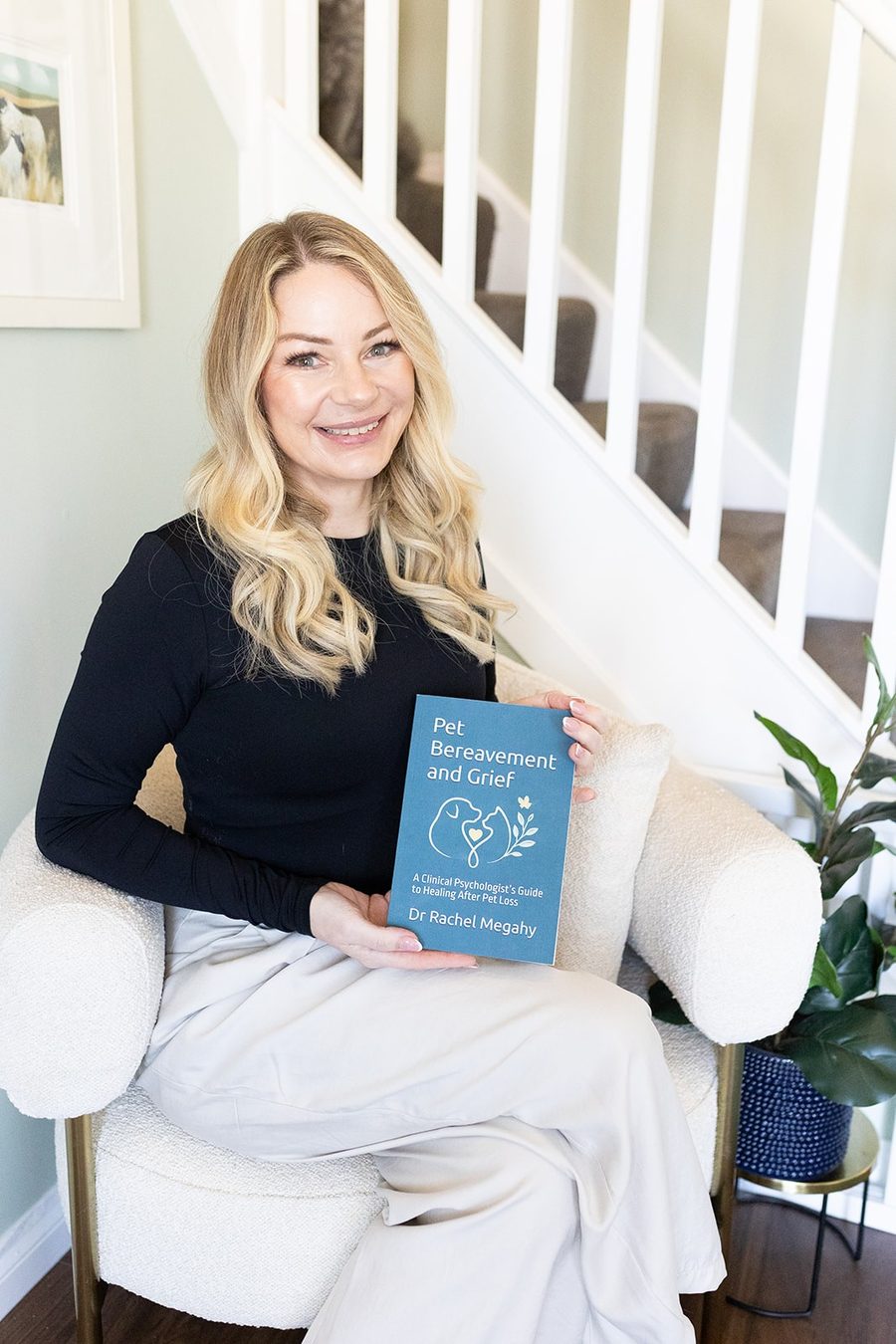
Not ready for the course?
Pet Bereavement and Grief is the gentler starting point — something you can read slowly, at your own pace, with no schedule to keep.
Six of the exercises in the course are drawn from it, so nothing is wasted if you decide to go further later.
See the book in the shopLifetime, including anything I add later.
Nothing expires and there's no schedule — start when you can.
No — it's structured guided self-help built on clinical approaches. It doesn't replace one-to-one therapy, and I'll point you toward that if you need it.
Grief work can surface things, so every module is designed to be stopped and returned to. There's a 30-day refund if it isn't right for you.
No. Every written exercise is optional, and there's nothing you have to submit or share with anyone.
Yes, this will help. The Ground and Tend modules are used by people going through anticipatory grief, and Tend covers end-of-life decisions directly.
No. Most people do, but you can go straight to Tend if guilt is the thing keeping you awake.
Each lesson takes five to fifteen minutes. Nothing is live, nothing is scheduled, and there's no group to join.
Yes — plenty of people arrive years later.
Narrated video lessons, guided audio practices and written lessons in your browser, on any device.
Yes, please do. The GENTLE Path was built to be something you can pass on with confidence. It's written by a Chartered Clinical Psychologist, grounded in evidence-based approaches, and clear about when someone needs more support than a self-help course can give. If you'd like cards or a link for your practice, get in touch.