
Losing a pet can feel disproportionate, disorienting, and difficult to explain — even to yourself.
For most people this isn't only grief. Your pet was doing four jobs at once: calming your body, shaping your day, giving you a role, and filling the house. They all stop on the same day.
The GENTLE Path is a six-module course that takes those four things one at a time. Written and recorded by a clinical psychologist. Yours for life, worked through at whatever pace you can manage.
Chartered Clinical Psychologist (HCPC PYL17840) · NHS and specialist service experience · Accredited member, Association of Pet Bereavement Counsellors · Author of Pet Bereavement and Grief
Why does this feel so much worse than you expected?
Most people arrive here asking some version of that question, and half of them are slightly embarrassed to be asking it.
It isn't sentimentality and it isn't an overreaction. It's that the animal you lost was load-bearing. They were part of how your body calmed down, how your day was organised, who you were to someone, and what the house sounded like. When they die, all four of those go at once — which is why the first weeks feel less like sadness and more like your whole system going offline.
The Structural Role Model of Pet Loss
The framework behind everything on this site, and the structure the course is built on.
Emotional Steadiness
Stroking them, the weight of them against you, their breathing in the room. These were genuine physiological regulators. Without that input, small things feel enormous and sleep breaks up.
Daily Structure
First thing, mid-afternoon, the walk before dark, the last trip out. Those anchors are gone and the day has lost its shape.
Sense of Role
You were someone's carer, and you were good at it. The job stopped mid-sentence.
Presence
There was a body in the house. The silence isn't just quiet; it's an absence you notice dozens of times a day.
You don't have to fix your feelings. You have to give those four things some support while grief does what it does. That's a far more doable task — and it's what the course walks you through.
Free · 2 minutes
Which of the four has your loss hit hardest?
Sixteen questions, psychologist-designed. You get a free guide matched to whichever area has been most disrupted, with exercises chosen for that pattern rather than for grief in general.
Start the quiz →Free — delivered immediately
Lost them in the last few weeks? Start here instead.
A day-by-day companion for the first two weeks after your pet dies: what to expect, what to lower the bar on, and small anchors to hold onto.
The main programme
The GENTLE Path
Six modules of structured guided self-help, built on the four domains. Not a support group, not videos of someone talking at you — a clinical framework you work through yourself, with the exercises I use in practice.
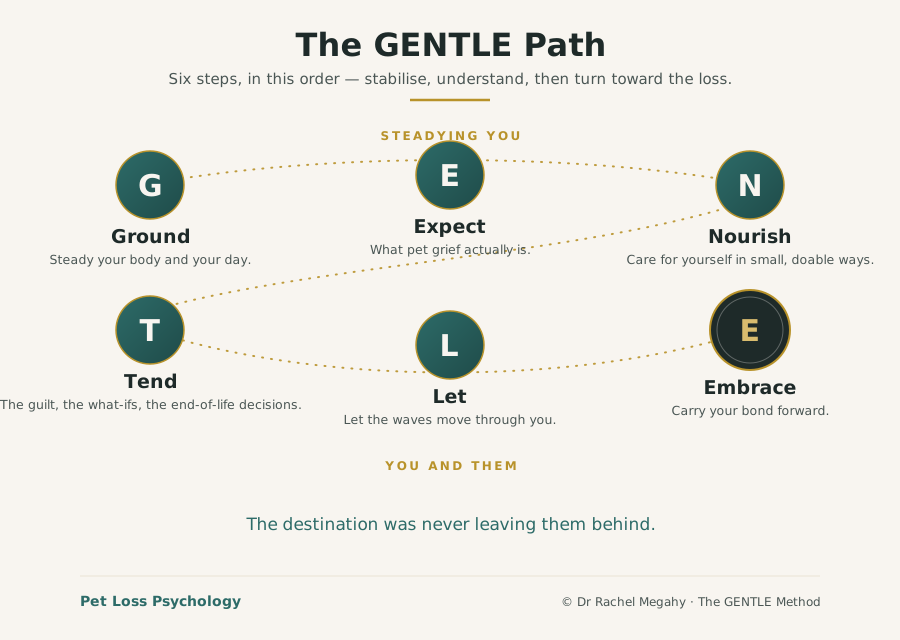
Ground. Settle the body first. Grief is a regulation problem before it's an emotional one.
Expect. Learn the shape of the waves so they stop frightening you.
Nourish. Sleep, food, daylight. The unglamorous things that decide how hard the rest of it is.
Tend. Tend the bond rather than trying to sever it. Photographs, rituals, memory work.
Let. Let support in, and handle the people who say "at least".
Embrace. Carry the relationship forward instead of leaving it behind.
What you get
- 33 lessons across a welcome module and six core modules, plus 9 bonus lessons in three bonus modules
- 7 guided audio practices
- 15 interactive exercises
- A printable workbook you keep
- Lifetime access — return to it in six months or six years
- Works on your phone, at 3am, with no one watching
Who it isn't for
If your pet died in the last few days, don't buy this yet. Start with the free guide. The course will still be here when you have the capacity for it.
£147 · lifetime access
About the cost of a single therapy hour, except you keep it for life.
30-day guarantee: if the course isn't right for you, email me within 30 days for a full refund. No forms, no questions.
Access begins immediately after purchase. By buying, you agree to the Terms of Use and understand you lose the 14-day right to cancel once access starts. 30-day money-back guarantee still applies.
Ways to Work With Me
Four ways in, from a book you can read tonight to one-to-one therapy.
£12.99
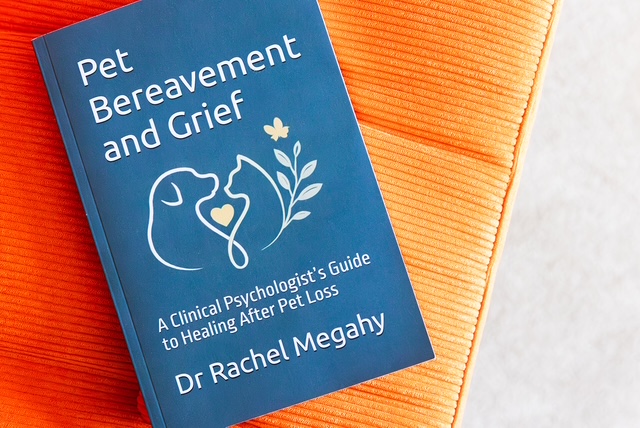
The bookPet Bereavement and Grief
The complete psychological guide, to read at your own pace.
Buy the book£147 · lifetime access
The GENTLE Path course
Six modules of structured guided self-help, with audio practices, exercises and a printable workbook. Lifetime access.
See the course
From £120
Individual therapy
Private one-to-one sessions for grief that has become hard to carry alone.
Enquire about therapyFree
Free resources
The First Fourteen Days, the grief-type quiz, and the article library.
Browse free resourcesWhere would you like to start?
However you've arrived here, there's a place to begin.
It happened in the last few days
Read thisIt happened suddenly
Read thisI had to make the decision
Read thisThey were my soul pet
Read thisI'm facing it soon
Read thisIt's been months and I'm not getting better
Read thisIt was years ago and it still hurts
Read thisMy child has lost their pet
Read thisMy other pet is grieving too
Read thisDr Rachel Megahy
- Chartered Clinical Psychologist (HCPC PYL17840, BPS Chartered)
- Accredited member of the Association of Pet Bereavement Counsellors
- NHS and specialist service experience
- Author of Pet Bereavement and Grief: A Clinical Psychologist’s Guide to Healing After Pet Loss
Vet, nurse or crematorium team? I provide training, consultation and team wellbeing support. See professional services →
You don't have to keep making sense of this on your own.
The GENTLE Path gives you the structure. Six modules, four areas, yours for life.
Access begins immediately after purchase. By buying, you agree to the Terms of Use and understand you lose the 14-day right to cancel once access starts. 30-day money-back guarantee still applies.
Start the GENTLE Path — £147